
Shipping large freight? The first thign you have to consider is choosing the trailer wisely because the efficiency, versatility, and load protection os everything. Every truck driver want a smooth moving, therefore, choosing different type of trailer can make a difference.
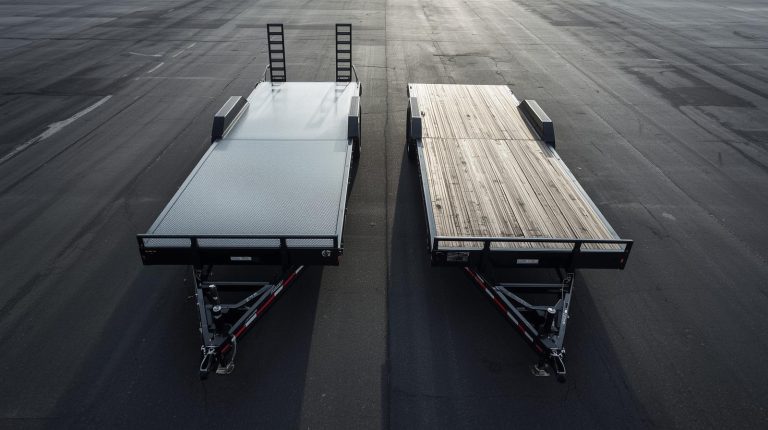
When considering hauling freight from one country to another, two names comes into the mind conestoga and Flatbeds. A flatbed trailer is a long flat platform that has no sides or roof and is fullu open to the air and elements. It is known as a commonly used vehicle in the freight industry.
On the other hand, a conestoga trailer, also known as curtain trailer, with a flatbed frame is a specialized trailer that can take a maximum 44,000 pounds weight. It provide protection, security, versatility of loading and unloading.
Both of the vehicles have unique advantages and disadvantages, therefore, understanding their exact difference is important for the drivers.
What Is A Flatbed Trailer
A flatbed trailer is a most common type of trailer which has no sides or roof. This vehicle is best to handle abnormally size goods with ease and available in different lengths such as 48ft to 53 ft. Moreoever, the carrying capacity of a flatbed trailer is around 48,000lbs an width is approximately around 8ft 6 inches. Its open dech allow a trucker to load and unload the haul easily, which shows that it is best for the transportation of things like lumber, large equipment, steel coils, building material, and more.
What Is A Conestoga Trailer
Having a flatbed frame, a conestoga trailer are a special kind of vehicle which can carry around 44,000 pounds weight. It consist of tree common types such as flatbed trailers, step-deck Conestogas, and double-drop Conestogas. These trailers also known as curtainside trailer deliver versatility through their unique tarping system. Moreover, the vehicle is best for carrying heavy freight and protect your load from te severe weather conditions as well. conestoga trailer is the best choice when your caro is unable to afford exposure to the elements.
Flatbed Vs Conestoga Key Differences- Which Saves More Time And Money
Superior Weather and Security Protection
The protection aspect becomes crucial when considering how a traditional flatbed leaves cargo exposed to harsh elements. While tarps can be used on flatbeds, they simply don’t match the level of protection or security that a fixed curtain system provides. The Conestoga curtain system provides a better protection as it provides a space around your cargo to protect the cargo against weather damages, theft, and unwarranted access. This safety veil rescues thousands of shipments against sudden storms and security issues that are often common in the transportation sector.
Enhanced Loading Operations
The loading process stands out as a critical operational factor when comparing trailer types. Conestoga trailers and standard flatbeds are both extremely flexible in terms of cargo handling, permit access on the top via a crane or overhead hoist, on the side via a forklift, or on the rear. But the Conestoga system does indeed help a great deal in the whole. Although a conventional flatbed needs to be manually tarped, which is time-consuming and labor-intensive, the design of the trailer Conestoga enables quick opening and closing of its retractable tarp system.
Maintenance and Durability Considerations
The mechanical parts of Conestoga systems also have to be maintained on a regular basis to make sure that the retractable mechanism runs smoothly. This cost of maintenance is, however, usually compensated by the fact that wear and tear on tarps and straps that flatbed operators would have to replace so frequently are diminished. The automated rolling system further removes the physical burden on drivers associated with manual tarping, which reduces possible worker compensation claims and enhances overall fleet safety records.
Operational Efficiency and Cost Impact
The time factor becomes significant when understanding that manual tarping on a flatbed can take a flatbed truck driver anywhere from 30 minutes to several hours, depending on the size and complexity of the load, plus weather conditions. This adds considerable non-driving time and labor costs to every shipment. In contrast, with a Conestoga truck, the retractable system can be opened or closed in just minutes, leading to faster turnarounds and potentially handling more loads in any given period. This efficiency boost directly impacts profitability and driver satisfaction.
Smart Fleet Management
Professional dispatching services including factoring services, insurance, document management, or rate negotiation, further enhance these operational advantages by optimizing route planning and load matching for both trailer types, ensuring Conestoga trailers are assigned to weather-sensitive or high-value cargo while directing flatbed units to oversized loads that require maximum accessibility, ultimately maximizing fleet utilization and revenue potential.
Benefits Of Using
When talking about the benefits of both, the conestoga basically protect your freight from wind, snow, and rain so there is the less risk of damage during the transportation. It saves time and effort because there is no manual tarping required. On the other hand, flatbed trailer are easy to load from any side because it can transport oversized, or oddly shaped haul easily. If talking about the costing options, the flatbed is more budget friendly comparing to conestoga trailer.
Bottom Line
When it comes to finding the right freight for you, no one size fits for all. Therefore, understanding flatbed Vs conestoga difference help you make a smarter decision. If your freight is sensitive to severe weather or you want fast loading, consider Conestoga. For oversized loads that reqire legal considerations, the flatbed is the best option. Looking for the cost friendly dispatching service? Look no further than Rock And Roll. Our professional staff is there for you 24/7, so, you can get rid of long empty miles.