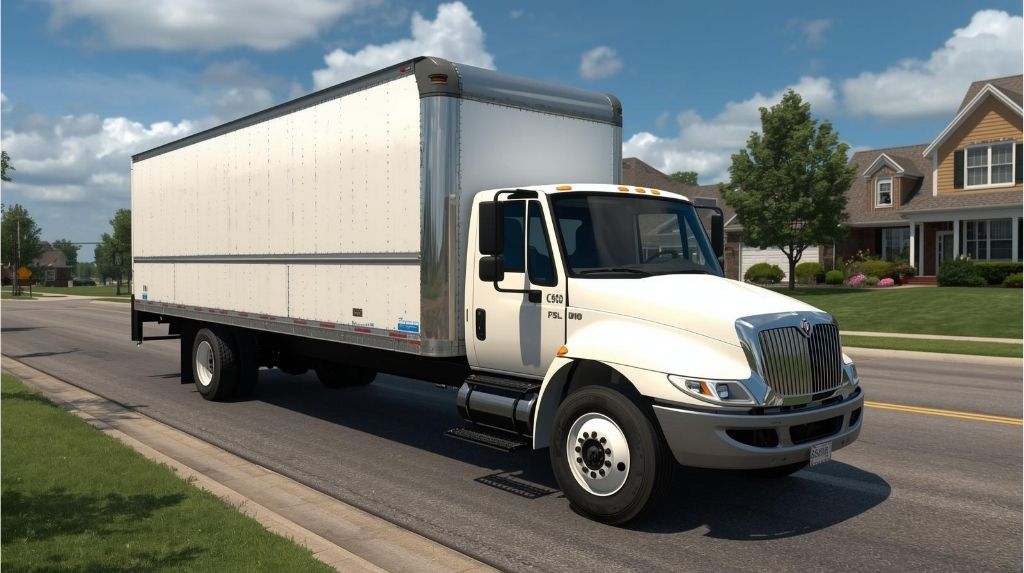
If you are a box truck owner, loading forklifts on your vehicle can be your everyday task. If it is your first time, then you must be thinking, “Can a Forklift Enter a 26 ft Box Truck or not?” The answer is Yes! A forklift can enter a 26-foot box truck, depending on several critical factors that many operators overlook. The type and class of box truck matter most when determining forklift entry compatibility.
Class 6 or larger box trucks typically work best for forklift operations because they feature 22.5-inch wheels that help reach the right dock height. Most 26 ft box trucks in this class have an interior width and height of approximately 96 inches, providing adequate space that allows a forklift to move inside and handle pallets safely.
However, sometimes, single axle 26 ft box trucks and non-CDL trucks often have weaker floors that may not support the combined weight of a forklift and full pallet, making them unsuitable for direct forklift access. Therefore, there are some conditions like forklift can only safely enter a box truck when the truck is the right size and type for the forklift.
In addition, there are other tips and safety precautions to consider so you can have a smooth delivery.
Can A Forklift Enter A 26 Ft Box Trucks?
The floor should be capable of supporting the weight of the forklift, load, and pallets at the same time. 26 ft box trucks designed for heavy-duty jobs typically feature reinforced floors that stop bending or breaking when a forklift drives in. Operators should always check the floor rating before loading anything, as a weak floor might break and cause damage or hurt someone. The gross vehicle weight rating (GVWR) for most 26 ft box trucks reaches up to 26,000 lbs, and this number includes the truck, forklift, load, and all pallets.
Exceeding these limits can lead to accidents, equipment damage, and potential injuries, so you should always know the weight of your forklift and the load you’re transporting.
Dock Height Specifications And Clearance Measurements
Dock height plays a big role in safe forklift enter operations. Most loading docks in the United States maintain a standard height between 48 and 52 inches, which matches the floor height of many Class 6 box trucks. When the dock and height of the box truck match, a forklift can enter and unload pallets with less risk. Some box trucks, like step vans or panel trucks, have lower bed heights that range from 19 to 36 inches.
When the box truck sits lower than the dock, operators need special equipment like dock levelers or elevating docks to help bridge the gap. You must check that the height of the box truck entrance door clears the forklift height by at least 5 cm (2 in) to ensure safe passage.
Pre-Entry Safety Checks And Inspection Procedures
The team must conduct thorough safety checks before a forklift enters a box truck. First, make sure the box truck is parked safely at the dock, then have the driver set the brakes and put chocks on the wheels. Operators need to look for damage like cracks or weak spots on the floor, and check if the dock plate is in the right place and can hold enough weight.
The forklift needs a full check too, including brakes, lights, warning signals, and tires. Inspect the interior of the box for trash, loose objects, and obstructions, holes or weak floors, poor lighting, and low overhead clearance. Install anti-slipping material in any area that could be a hazard due to weather conditions, and ensure that docks and dock plates are clear of obstructions and not oily or wet.
Loading And Unloading Operations
Safe loading and unloading require planning. Operators should be familiar with the capacity of the forklift and box truck (weight) and when necessary, use a sturdy ramp that is not slippery. The crew must clear the area and design the route of the forklift. When loading, load side to side and front to back with wheel chocks and heavy straps to ensure that the forklift and pallets are safe throughout the trip. It is advisable that operators should drive at a low speed particularly when the ground is wet or rough.
When loading the forklift onto the box truck, it is important to have a clear plan before doing it, and the route that you are going to take. Evenly place the weight of the forklift on the truck bed and make sure that it is evenly distributed side to side and back to front since if the weight is not balanced, the stability of the truck will be compromised during transportation.
Communication And Training Protocols
Good communication keeps everyone safe during loading and unloading operations. Operators should talk to the box truck driver before starting, and the team uses horns, warning lights, and hand signals to show their intentions. Spotters help in places where it’s hard to see or when it’s crowded, while people walking nearby should wear bright clothes so they can be seen. Forklift operators need special training before working with box trucks.
Employers must teach operators how to use forklifts safely, and the training includes lessons, practice, and a test from a trainer. Operators learn about safe driving, controls, load limits, and moving cargo. Certification lasts three years, and all individuals involved in the loading and unloading process should be properly trained and certified to operate forklifts and handle related equipment.
Final Thoughts
Still wondering “can a forklift enter a 26 ft box trucks?” The answer is Yes! Ongoing training and adherence to safety protocols are essential requirements that make loading forklifts onto box trucks both efficient and accident-free.
This task becomes successful when combined with careful planning that prioritizes worker safety. Following the right tips and safety precautions helps ensure that the entire process remains secure and well-organized from start to finish.
Are you looking for the best dispatching services to find suitable loads for your box truck operations? Rock and Roll Dispatching Company specializes in connecting drivers with profitable freight opportunities while ensuring safe and efficient transportation solutions. Contact us today to discover how our expert dispatching services, including factoring services, billing assistance, rate negotiation, and more, can help maximize your earning potential on the road.