The hotshot trucking industry moves an estimated $700 billion worth of freight annually across North America.
Yet a surprising number of those loads still end up on the wrong trailer because shippers never fully understood the difference between a flat deck vs flatbed hotshot setup. The result is not just paperwork trouble.
It means damaged cargo, compliance violations, and delivery windows that collapse before the truck reaches its destination.
Hotshots offer lower startup costs and faster delivery, while flatbeds provide maximum capacity and, often, crane-assisted loading. But what truly sets these two apart, and which one actually fits the load before the truck leaves the yard?
Quick Comparison- Flat Deck vs Flatbed Hotshot
This side-by-side breakdown covers the core differences worth knowing before a load is tendered.
| Feature | Full Flat Deck (Semi) | Flatbed Hotshot |
| Trailer Length | 48 to 53 feet | 20 to 40 feet |
| Max Payload | Up to 48,000 lbs | Up to 16,500 lbs |
| Truck Type | Class 8 Semi | Class 3 to 5 Pickup |
| CDL Required | Always | Depends on GCWR |
| Best For | Heavy or oversized freight | Small, time-sensitive loads |
| Booking Speed | 1 to 3 days | Same day to 24 hours |
| Cost Per Pound | Lower (high volume) | Higher (expedited) |
| Site Access | Standard dock or yard | Tight spaces and remote sites |
| Weather Cover | None (open deck) | None (open deck) |
What Is a Flat Deck Trailer?
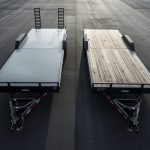
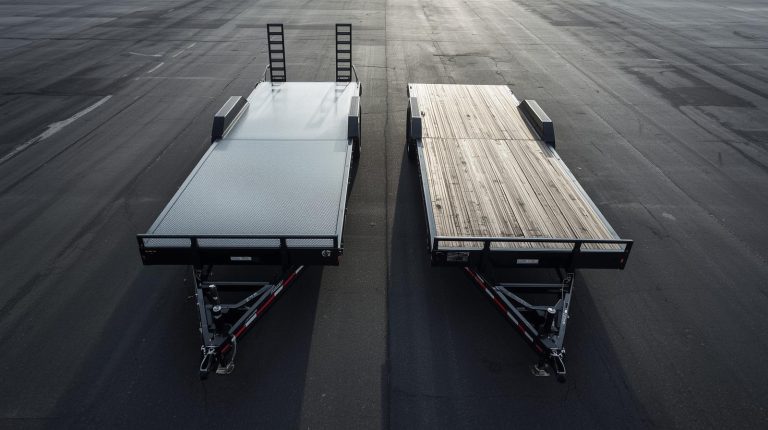
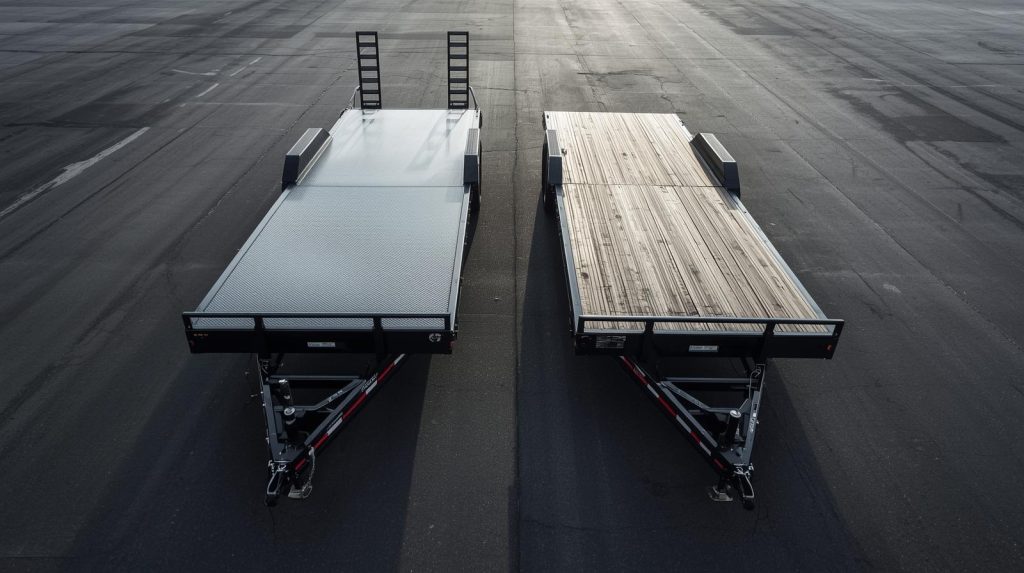
A flat deck trailer has a completely open, flat surface with no sides, roof, or enclosure. Cargo sits directly on the deck and gets secured through straps, chains, or binders.
Flat decks come in several configurations, including standard flatbeds, step decks, double drops, and removable goosenecks, each serving different load heights and weight needs.
In the flat deck vs flatbed hotshot comparison, the flat deck is the broader category. A flatbed hotshot trailer falls under it but carries a more specific identity tied to the hotshot hauling model.
What Makes Hotshot Flatbed Trucking Different
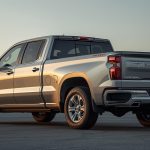
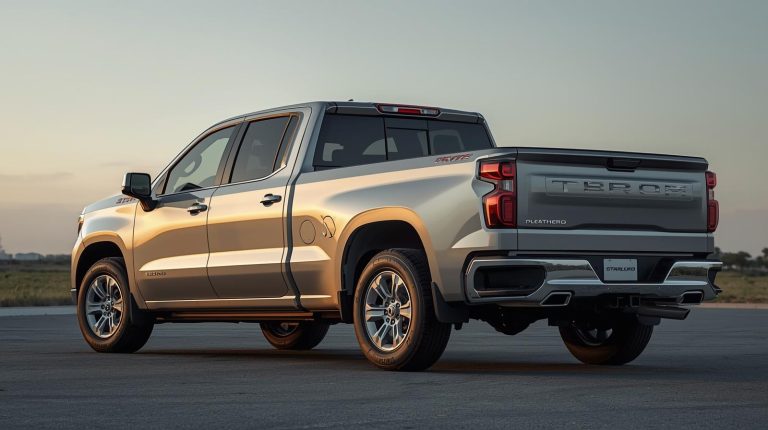
Hotshot trucking uses a medium-duty pickup, typically Class 3 to Class 5, pulling a flatbed or gooseneck trailer to move expedited freight fast.
A flatbed hotshot trailer usually runs 20 to 40 feet compared to the 48 or 53 feet of a full commercial flatbed semi. Payload limits also differ sharply. Hotshot setups max out around 16,500 pounds, while a full flatbed semi handles up to 48,000 pounds legally.
For loads that do not fill a full truck, a Rental Trailer can sometimes bridge the gap when the hotshot weight window is too tight, but a full semi feels like overkill.
When Full Flat Deck Makes More Sense
Full flat deck service is the right move when the load is heavy, oversized, or needs specialized equipment like a lowboy or removable gooseneck.
Steel coils, industrial machinery, precast concrete panels, and large HVAC units regularly push past hotshot payload limits.
For freight that needs weather protection rather than an open deck, a Box Truck keeps cargo sealed from road debris and rain in ways neither a flat deck nor a hotshot trailer can offer.
When Hotshot Flatbed Is the Smarter Call
The hotshot flatbed earns its place in the expedited, lighter-load niche. Oilfield parts, agricultural equipment, fencing materials, and construction supplies that need to reach a job site within 24 to 48 hours and stay well under 16,500 pounds are ideal candidates.
Hotshot rigs also get into remote farms, narrow industrial yards, and tight construction sites where a full semi simply cannot go.
When freight needs basic element protection but not full refrigeration, comparing a Dry Van against both options before committing can prevent avoidable damage claims.
About The Role of Power Only
One option that gets overlooked in the flat deck vs flatbedhotshot conversation is the Power Only model, where a carrier provides just the truck and driver while the shipper supplies the trailer.
This fits companies that already own flat deck trailers but need a driver on short notice or need trailers moved between facilities without booking a full freight service. It is a cost-effective bridge between hotshot speed and full flatbed capacity.
Get the Right Trailer for Every Load
Matching freight to the right equipment is only half the battle; getting it booked, negotiated, and delivered on time is where profits are truly made. As a professional dispatching partner, Rock And Roll helps truckers and owner-operators secure the right flat deck or flatbed hotshot loads, negotiate strong rates, handle paperwork, and keep wheels turning without the daily stress. With the right dispatch strategy, every mile works harder, and every load moves with purpose.
FAQS
What is the main difference between a flat deck and a flatbed hotshot trailer?
A flat deck covers all open-deck trailers with no sides or roof. A flatbed hotshot is a specific type pulled by a medium-duty pickup rather than a semi, built for expedited delivery of smaller, lighter loads.
How much weight can a flatbed hotshot carry?
Most hotshot setups carry between 14,000 and 16,500 pounds of payload, depending on the truck’s GVWR and trailer setup. A full flatbed semi handles up to 48,000 pounds legally.
Does a hotshot driver need a CDL?
If the combined GCWR exceeds 26,001 pounds, a CDL is required. Many operators run just under that threshold, but requirements vary by state and should be verified on every route.
Is hotshot trucking cheaper than full flatbed freight?
For small, lightweight loads on tight timelines, hotshot often works out more economically overall. However, the cost per pound is higher with hotshot. For heavy freight, full flatbed service offers better value.
What cargo suits hotshot flatbed delivery best?
Oilfield equipment parts, construction materials, agricultural supplies, small machinery, and fencing materials are ideal. Anything time-sensitive, under the weight limit, and not needing enclosed protection fits well.
When should a shipper choose a flat deck semi over a hotshot?
When the load exceeds 16,500 pounds, involves multiple drops over long distances, needs specialized equipment like a lowboy, or requires fleet-level reliability and compliance, a full flat deck semi is the right call.