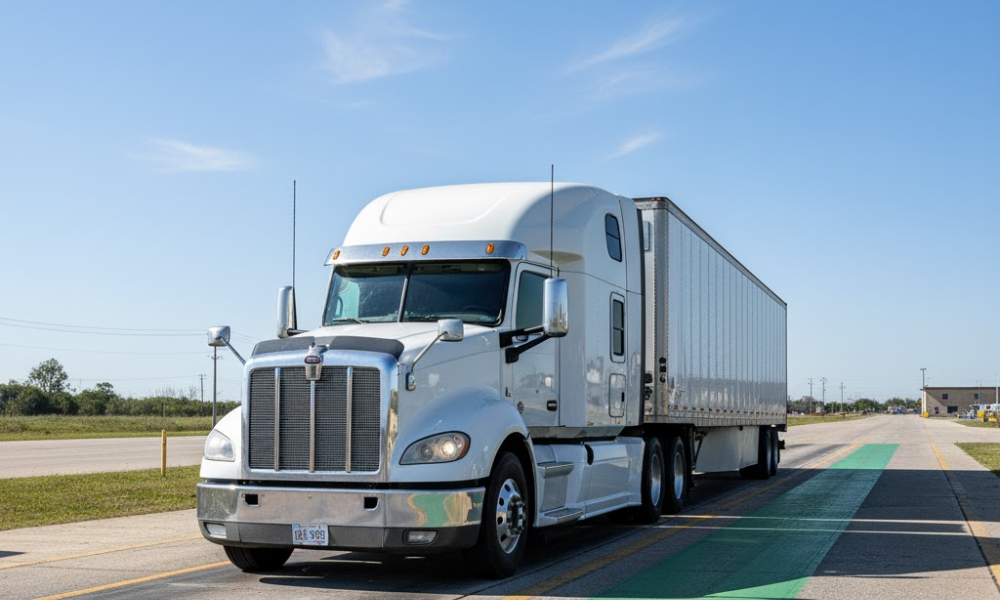
According to the legal rules, a loaded truck with a 53-foot dry van trailer, refrigerated reefer, or flatbed trailer must comply with specific axle weight limits: 20,000 lbs for a single axle, 34,000 lbs for tandem axles.
The backbone of our economy, the heavy haul trucking services, serves as the lifeline for transporting essential goods across long distances. However, with great power comes great responsibility, and ensuring the safety of both drivers and infrastructure requires stringent regulations on truck weight, with a particular focus on axle weight distribution.
Every state has different regulations for the maximum gross vehicle weight (total weight of the loaded truck and trailer) allowed on its roads. These weight regulations are based on the state’s infrastructure and what the roads can safely support.
In addition to a total weight limit for a loaded truck, most states have weight limits for single axle, double axle, and tri-axle trucks And here’s where things get interesting: not all 53’ trailers carry weight the same way, even when the numbers look identical.
Legal Weight Limits for 53′ Trailers- Breaking Down The Numbers Per Axle
The steer axle typically handles 12,000 to 15,000 lbs, though legal limits allow up to 20,000 pounds. Drive axles and trailer tandems each support 34,000 pounds when measured as a single unit on truck scales.
Each tire on the drive axle carries approximately 4,250 lbs, while front tire loads reach about 6,750 lbs. The total weight calculation becomes crucial because exceeding weight on any axle group makes a load illegal, even if gross weight stays under 80,000 pounds.
Shippers loading a 53′ trailer must subtract the tractor weight (usually 32,000 lbs) and trailer weight from the federal limit to determine actual carrying capacity; generally 43,000 to 48,000 pounds for dry van trailers, 42,500 to 44,000 pounds for temp-controlled reefer equipment, and 45,000 to 48,000 pounds for flatbed trailers.
As a general reference, here are the typical freight-weight thresholds for the three most common tandem-axle trailer types:
| Trailer Types | Maximum Weight Allowed |
| 53-foot refrigerated trailers | 43,000 to 45,000 pounds |
| 53-foot dry van trailers | 43,000 to 46,000 pounds |
| 53-foot flatbed trailers | 45,000 to 48,000 pounds |
What Affects Your Trailer’s Payload Capacity
The Three Critical Variables
There are three variables that play a major role in determining the legal capacity of a 53-foot trailer to accommodate cargo. Fuel weight is not as insignificant as they may think. Diesel fuel has a weight of about 7 pounds per gallon, and considering that the tank had 120 and 150 gallon capacity, then it is 840 and 1,050 pounds respectively to the total gross weight.
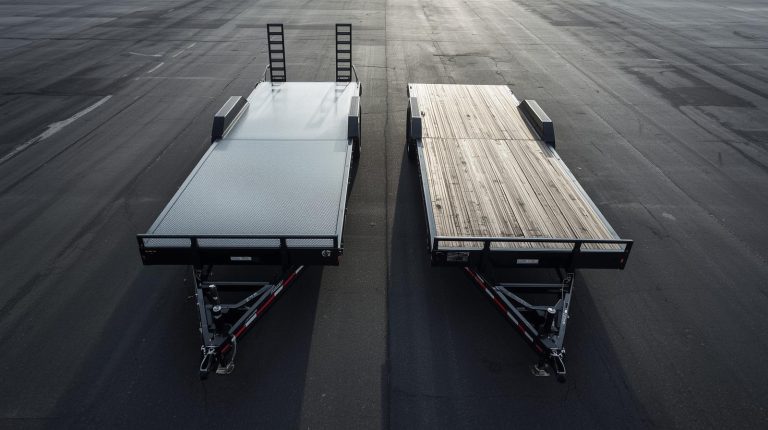
The kind of tractor, day cab or sleeper, alters calculations because sleepers are heavier depending on size and equipment outfitting. Equipment type creates the biggest variance: flatbeds use lightweight aluminum without walls or ceiling, allowing heavier loads, while reefer’s thicker walls with insulation and the refrigeration unit add more weight to the trailer, reducing cargo weight capacity.
Specialty Equipment Considerations
Some motor carriers offer lightweight trailer capacity that handles roughly 48,000 pounds, though at higher freight costs. These specialized trailers help shippers maximize payload while staying within legal boundaries, making them popular in industries like forest and paper products where every pound counts.
Intermodal Weight Restrictions
Domestic intermodal shipments face stricter limitations than truckload moves. The max payload for intermodal sits at exactly 42,500 pounds, no exceptions. This lower limit exists because containers must stand up to class 1 railroads double stacking on wellcars, requiring a much more rigid container paired with a heavy duty chassis.
Freight brokers and shippers transitioning from truckload to intermodal often encounter weight issues when loaders expect truckload capacity. The combination of reinforced container-on-flatcar (COFC) intermodal structures means load shifts can quickly push weight distribution into illegal status, creating potential for DOT fines, rework charges, and delays in shipping on-time.
State Regulations And Geographic Variations
How States Set Their Own Rules
Each state maintains authority to set stricter limits based on unique infrastructure and traffic patterns. While federally mandated maximum weights provide baseline standards across the National System of Interstate and Defense Highways, Non-Interstate roads in some states impose different weight requirements for route planning.
California stands as the most restrictive, with a max distance of 40 feet from kingpin to center of the rear axle. Rhode Island allows 41 feet, while most jurisdictions measure to the center of the tandem axles. Understanding these state-by-state differences prevents costly violations when crossing state lines.
About The Canadian Weight Standards
Canadian provinces use the metric system: 5,500 kg (12,125 lbs) for the steering axle and 17,000 kg (37,479 lbs) for drive and tandem axles, though some provinces vary. Carriers hauling across the border need conversion charts readily available to avoid confusion during weigh-ins.
Practical Weight Management Techniques
Adjusting Weight Through Tandem Sliding
When truck weighs less than 80,000 lbs but sits too heavy on the drive axle or tandem axle, sliding the tandem redistributes weight. Pulling the lever near the driver’s side releases four locking pins that hold the tandem axles in position.
Moving the tractor forward while the trailer brake is set positions tandems toward the rear, distributing more weight to drive axles. Each hole in the locking rail represents approximately 250 lbs of weight shift. After adjusting, reweigh at a CAT Scale location to confirm compliance, their scales’ accuracy is guaranteed.
Fifth Wheel Adjustments
The fifth wheel position also affects weight between drive axles and the steer axle, though adjustments happen less frequently. Once the ideal position gets established for heavy loads, that same setting typically works for similar shipments going forward.
Why Compliance Matters Beyond Fines
Public safety remains the number one priority when DOT enforces legal weight standards. Overloaded trucks create a triple threat: increased stopping distances, tire blowouts from excessive pressure, and accelerated deterioration of bridges and pavements. A shipment loaded heavily involved in a fatal accident exposes shippers and carriers to huge lawsuits beyond standard fines of $2,000 – $3,000 for overweight violations.
Regular weigh-ins using certified scales both before and after loading provide real-time data about the truck’s weight, helping avoid the financial costs of operating violations. Strategic load distribution ensures no single axle carries too much weight, enhancing safety and stability across all axles. Securing overweight permits in advance when cargo exceeds standard thresholds prevents potential delays during transit.
Why Not All 53’ Trailers Carry Weight the Same Way
Although the axle limits provided by the law may appear easy to understand on paper, how the weight actually lays in the interior of a 53’ trailer, can differ significantly. Weight can be balanced in the front, center or in the back with different trailer designs, different types of suspension and different loading patterns without noticing on the first look.
A pallet that is slightly out of position can overweight an axle even though the overall weight is well within the legal limits. This is why drivers will tend to slide their tandems, set air-ride suspensions, or rearrange freight to remain at par. It doesn’t really matter how much you carry along, it is where you place the weight that counts. Similarly, knowing about pallets in a 53-footer vehicle is one of the essential elements of maintaining the balance and safety.
Conclusion
In reality, even seasoned transportation experts find it difficult to understand the many nuances of legal axle weight restrictions.The dimensions of each specific shipment are determined by a wide range of elements and laws, including axle amount, weight variances between tractor and trailer types, and federal and state-imposed limits.
For this reason, it’s advisable to deal with a professional dispatching company that can assist you in being ready for the applicable weight limits. At Rock And Roll Dispatch Services, we provide truckers with the suitable loads and other relevant services so they can stay compliant, maximize their hauling efficiency, and focus on the road without worrying about fines or overloaded axles. With the right support, every mile becomes safer, smoother, and more profitable.