
Dispatch Service
Dispatch Service
Dispatch Service
Dispatch Service
Dispatch Service
Dispatch Service

Our Truck Dispatch Services are designed to keep your trucks on the road and your profits growing. We provide end-to-end dispatch solutions for owner-operators and small to medium trucking companies. Our experienced team handles load booking, rate negotiation, paperwork, and communication with brokers and shippers—so you can focus on driving. With 24/7 support, real-time updates, and optimized route planning, we ensure maximum efficiency, reduced downtime, and consistent cash flow for your trucking business.
The International Fuel Tax Agreement (IFTA) is a cooperative agreement among 48 contiguous U.S. states and 10 Canadian provinces. It simplifies the reporting and payment of motor fuel taxes for interstate carriers.
IFTA requires carriers operating qualified motor vehicles (those used to transport property or people for compensation with certain weight/axle criteria) to obtain an IFTA license and decals.
Accounting is the comprehensive process of recording, summarizing, and reporting financial transactions, ensuring that a business’s economic activities are tracked accurately. It provides essential insights into performance, profitability, and financial health.
Billing, on the other hand, is the specific function of generating and sending invoices to customers for goods or services rendered. It’s a critical component of the sales process, ensuring timely payment and managing accounts receivable. Effective integration between these two functions is vital for cash flow management and accurate financial reporting. Modern software often streamlines both to minimize errors and improve efficiency.
Document management is a comprehensive system and set of practices designed to organize, store, secure, and retrieve an organization’s documents and information efficiently. It moves beyond simple filing to encompass the entire document lifecycle, from creation to disposal.Key components typically include a Document Management System (DMS), which is software for electronic storage and access, ensuring that the latest versions are always available and that documents comply with regulatory standards.
DOT Compliance refers to adhering to the rules and regulations set forth by the U.S. Department of Transportation (DOT), primarily through its agency, the Federal Motor Carrier Safety Administration (FMCSA). These regulations are mandatory for companies operating Commercial Motor Vehicles (CMVs) across state lines, ensuring safety on public roadways.
Factoring services provide a crucial financial lifeline for transportation and trucking companies. Essentially, factoring involves selling your outstanding freight invoices (accounts receivable) to a third-party financial company (the factor) at a small discount. This gives the carrier immediate cash flow, typically within 24 hours, rather than waiting 30 to 90 days for shippers or brokers to pay. This quick access to working capital is vital for covering immediate operational costs like fuel, repairs, and payroll.
Company formation is the legal process of registering a business entity, such as a Limited Liability Company (LLC) or a Corporation, with the relevant government authority. This crucial first step involves choosing a business name, determining the ownership structure, drafting formation documents, and securing necessary licenses. Proper formation establishes the company’s legal identity, provides liability protection for its owners, and enables it to operate legally, open bank accounts, and raise capital.
In the logistics industry, rate negotiation and effective dispatch service are crucial for profitability and smooth operations.
Rate negotiation involves skillfully setting prices for transportation services. Carriers must factor in operational costs, market demand, fuel prices, and specific lane requirements when dealing with shippers or brokers. Successful negotiation ensures a competitive rate while maintaining a healthy profit margin for the carrier.

Maximize driver profits with efficient load booking, routing, and 24/7 support.

Quarterly filing of fuel taxes, calculating mileage & purchases for US/Canada.

Seamlessly manage finances, track expenses, and ensure prompt client invoicing.

Organize, secure, and retrieve all business documents efficiently and digitally.

Ensuring full adherence to DOT regulations: safety, licensing, and hours of service.

Instant cash flow by selling your invoices; maintain liquidity and stability.

Expertly setting up your new business: registration, legal structure, and filing.

Expertly securing the best freight rates to maximize revenue and profitability.

Specialized dispatch to help new carriers find high-paying loads and start strong.

Specialized dispatch to efficiently move vehicles and maximize hauler revenue.
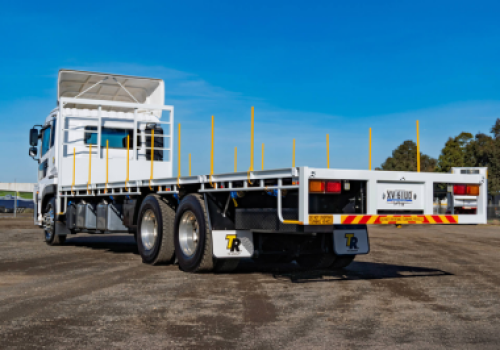
Flexible trailer solutions for rent, covering all your short or long-term hauling.

Lorem ipsum dolor sit amet, consectetur adipiscing elit. Ut elit tellus, luctus nec ullamcorper

Lorem ipsum dolor sit amet, consectetur adipiscing elit. Ut elit tellus, luctus nec ullamcorper

Lorem ipsum dolor sit amet, consectetur adipiscing elit. Ut elit tellus, luctus nec ullamcorper

Lorem ipsum dolor sit amet, consectetur adipiscing elit. Ut elit tellus, luctus nec ullamcorper

A truck dispatch company is a service provider that connects truck drivers and owner-operators with freight loads. They handle load booking, route planning, paperwork, billing, and communication between drivers and shippers. Dispatchers essentially act as intermediaries who help truckers find profitable loads while managing the administrative aspects of freight transportation.
Most dispatch companies charge either a percentage of the gross load revenue (typically 3-8%, with 5-6% being average) or a flat weekly fee ranging from $120-$500 per truck. Some companies offer hybrid models with percentage caps or paperwork-only services for a lower flat fee.
Setup typically takes 1-3 business days after providing all required documentation. This includes:
Many companies offer trial periods or short-term contracts. Options include: