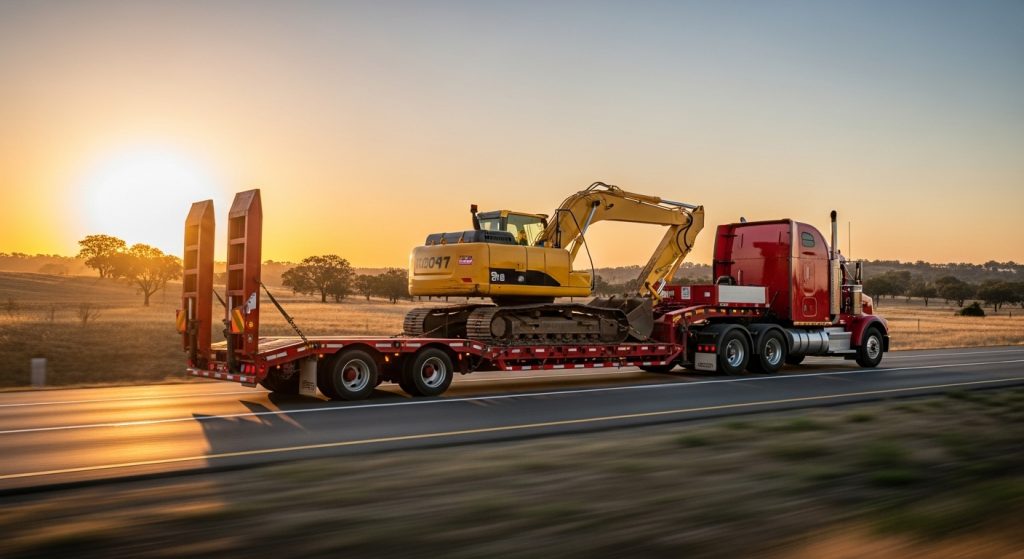
When you see heavy construction equipment moving on highways, there is a good chance it’s on a lowboy trailer. This special hauling equipment helps transport tall and heavy machinery safely across the country. If you work in construction or heavy transport, understanding what a lowboy trailer is can help you make better choices for your hauling needs. But what makes these trailers so different from regular flatbeds?
What Is a Lowboy Trailer?
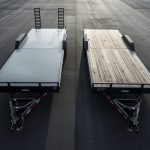
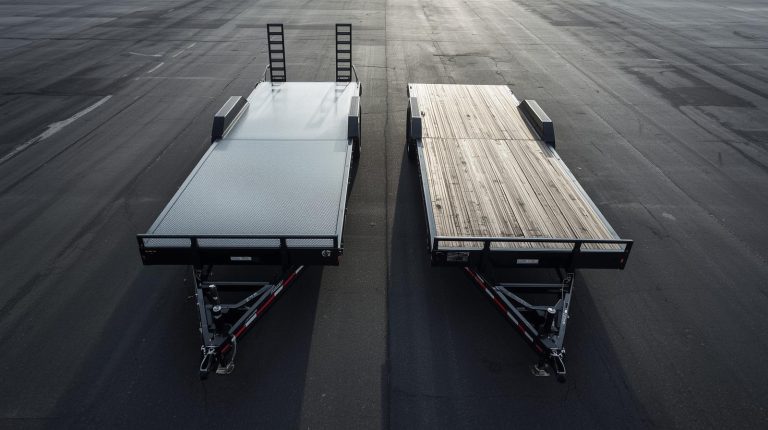
A lowboy trailer is a special type of flatbed trailer built for moving oversized and tall loads. It has two drops in deck height. One drop comes right after the gooseneck and another before the wheels.
This design sits much closer to the ground than regular trailers. The low height lets you haul taller equipment without breaking road height rules. Most states limit trailer height to 13 feet 6 inches.
Some people call these trailers low-bed trailers or double drop trailers. All these names mean the same thing.
How Does a Lowboy Trailer Work?
Lowboy trailers connect to powerful trucks for towing. Most have hydraulic systems that lift the deck when loading cargo. All models come with air brakes for safe stopping.
The deck sits between the gooseneck and rear wheels. This creates a “well” that holds your cargo low and stable. Heavy-duty models can have 2 to 8 axles.
Operators control these axles with remote systems. You can lift or swivel them as needed for different loads.
Lowboy Trailer Dimensions and Weight Capacity
Understanding size matters when choosing equipment. Here are typical lowboy trailer specs based on industry standards.
The right dimensions ensure your cargo fits safely and legally on the road.
Standard Measurements
- Deck height: 18 to 24 inches from the ground
- Deck length: 24 to 29.6 feet (well area)
- Overall length: Up to 53 feet or longer
- Width: 8.5 feet standard (wider with permits)
- Load height capacity: Up to 12 feet without special permits
Weight Limits
A standard 2-axle lowboy can carry 40,000 pounds. Adding more axles doubles this to 80,000 pounds or more. Some heavy-duty models with many axles can haul 150,000 pounds.
The weight capacity depends on axle configuration. More axles mean you can carry heavier loads legally.
Different Types of Lowboy Trailers
Not all lowboy trailers work the same way. Each type serves different hauling needs and loading requirements.
Let’s explore the three main categories you will encounter in the heavy transport industry.
Fixed Neck Lowboy
This type has a neck that stays permanently attached. You cannot adjust or remove it. The fixed design makes these trailers lighter in weight.
This means more capacity for your actual cargo. However, you need ramps or special equipment to load items onto the deck.
Fixed Gooseneck Lowboy (FGL)
FGL trailers have an arched gooseneck design. The neck can be lowered to create a loading ramp. This makes it easier to drive equipment onto the trailer.
Once you reattach the gooseneck, it stays in a fixed position during transport. These trailers offer slightly longer deck space than other types.
Removable Gooseneck Lowboy (RGN)
RGN trailers give you the most flexibility. The gooseneck detaches completely from the deck. You can drive, push, or pull equipment directly onto the trailer bed.
These come in two versions: mechanical and hydraulic. Hydraulic models let you adjust height with cylinders. RGN trailers can extend up to 20 axles for super heavy loads.
Common Uses for Lowboy Trailers
Industries across America rely on lowboy trailers daily. These specialized trailers handle cargo that standard equipment simply cannot transport.
Here’s what they typically haul across different sectors.
Construction Equipment
- Bulldozers and excavators
- Backhoe loaders
- Tower cranes
- Concrete pumps
Agricultural Machinery
- Large tractors
- Combine harvesters
- Farming implements
Industrial Equipment
- Generators and transformers
- Mining equipment
- Oilfield machinery
- Wind turbine components
Any load that’s too tall for a standard flatbed needs a lowboy. The construction industry uses these trailers most often.
Benefits of Using Lowboy Trailers
Why choose a lowboy over other trailer types? The advantages go beyond just hauling tall equipment.
These trailers offer practical solutions that make heavy transport safer and more efficient.
Better Height Clearance: The low deck lets you haul 12-foot-tall equipment legally.
More Stability: Lower center of gravity means safer transport on highways.
Easy Loading: RGN models make loading heavy equipment simple and fast.
Industry Flexibility: Works for construction, farming, mining, and more.
DOT Compliance: Stays within legal height limits without special permits.
RGN vs Standard Lowboy: Which One to Choose?
Choosing between RGN and standard lowboy depends on your specific hauling needs. Understanding the key differences helps you make the right decision.
Both have their strengths for different transport situations.
Loading Method: RGN detaches for easy front loading. Standard lowboys need rear or side loading.
Weight Capacity: RGN can handle up to 150,000 pounds. Standard lowboys max out around 80,000 pounds.
Cost: RGN trailers cost more but offer more versatility.
Best For: Use RGN for heavy motorized equipment. Choose standard lowboys for lighter, non-motorized loads.
At Rock & Roll, we understand the importance of proper equipment hauling. Our truck dispatching services connect you with the right trailers for your cargo needs.
Choosing the Right Lowboy Service
When you need lowboy trailer services, consider these factors. Making informed choices protects your cargo and keeps you within legal requirements.
Here are the key elements to evaluate:
- Load weight and dimensions
- Type of equipment being moved
- Loading and unloading requirements
- Distance of transport
- Budget constraints
Professional dispatch services help match your cargo with the right trailer type. Whether you need a flatbed or specialized heavy haul equipment, expert dispatchers find the best solutions.
Final Thoughts
Lowboy trailers play a vital role in moving America’s heavy equipment. Their low-deck design allows safe transport of tall machinery that regular trailers cannot handle. Understanding the different types helps you choose the right equipment for each job.
From fixed neck to RGN models, each lowboy trailer type serves specific purposes. Construction companies, farmers, and industrial operators all depend on these specialized trailers.
Need help with your heavy haul dispatch? Rock & Roll offers professional RGN dispatch services and step deck solutions. Our experienced team finds the right equipment at the best rates for your hauling needs.
Contact us today to learn how we can keep your heavy equipment moving safely and efficiently across the country.